Paris 16th & Pontoise (95)
Blepharoplasty
Eyelid surgery — Paris 16th & Pontoise
Blepharoplasty is eyelid surgery. It corrects drooping eyelids, under-eye bags and skin excess that weigh down the gaze and give a tired appearance. Performed in Paris 16th and Pontoise by Dr. de Clermont-Tonnerre, it may be covered by French national health insurance when it is functional.
Book a consultationTwo techniques
Upper or lower blepharoplasty?
Upper blepharoplasty
Drooping eyelids
Corrects excess upper-eyelid skin that weighs the gaze down and may impair the visual field. The scar is concealed in the natural eyelid crease and becomes invisible.
- Excess overhanging skin
- Heavy, tired-looking gaze
- Possible visual impairment (functional ptosis)
- Health insurance reimbursement if ptosis is documented
Lower blepharoplasty
Under-eye bags
Addresses fatty hernias causing under-eye bags and hollow dark circles. The scar is placed just beneath the lash line, or via a trans-conjunctival approach (no external scar).
- Persistent under-eye bags
- Tired appearance despite adequate rest
- Hollow dark circles (fat transfer possible)
- Trans-conjunctival approach available — no external scar
Both techniques can be combined in a single procedure (four-eyelid blepharoplasty).
Step by step
How the procedure works
Consultation and assessment
Examination of the eyelids, assessment of skin excess, fatty hernias and muscle tone. Ophthalmological assessment if functional ptosis.
Pre-operative
Blood tests, anaesthetic consultation. Mandatory 15-day reflection period.
Procedure
Local or general anaesthesia depending on the case. Duration 45 minutes to 2 hours depending on eyelids treated. Removal of excess skin and/or fat.
Hospitalisation
Day case in most cases. Application of ice and light dressings.
Follow-up
Suture removal at day 5–7. Bruising resolving within 10 to 15 days. Definitive result at 6 months.
At a glance
- Duration
- 45 min to 2 hours
- Anaesthesia
- Local or general
- Hospitalisation
- Day case
- Time off work
- 7 to 10 days
- Result
- At 3 months
- Reimbursement
- Possible if functional ptosis
Advantages
- Rejuvenated, open gaze
- Invisible scars in the natural creases
- Possible improvement of visual field
- Can be performed under local anaesthesia
- Day case in most cases
- Long-lasting results (8 to 12 years)
Risks
- Retro-orbital haematoma (rare but serious)
- Transient dry eye
- Lagophthalmos (incomplete eye closure, transient)
- Ectropion (lower eyelid eversion, rare)
- Unsightly scar
- Residual asymmetry
Insurance & Reimbursement
Upper blepharoplasty may be covered by French national health insurance if the ptosis is functional (visual field impairment documented by perimetry). Prior approval from the CPAM is required. Aesthetic blepharoplasty remains at the patient's expense.
Expected results
Blepharoplasty opens and rejuvenates the gaze naturally. The effect is immediately perceptible once the bruising has resolved (10 to 15 days). The definitive result is stable at 6 months. Patients appear rested and rejuvenated without anyone detecting a surgical procedure.
Résultats
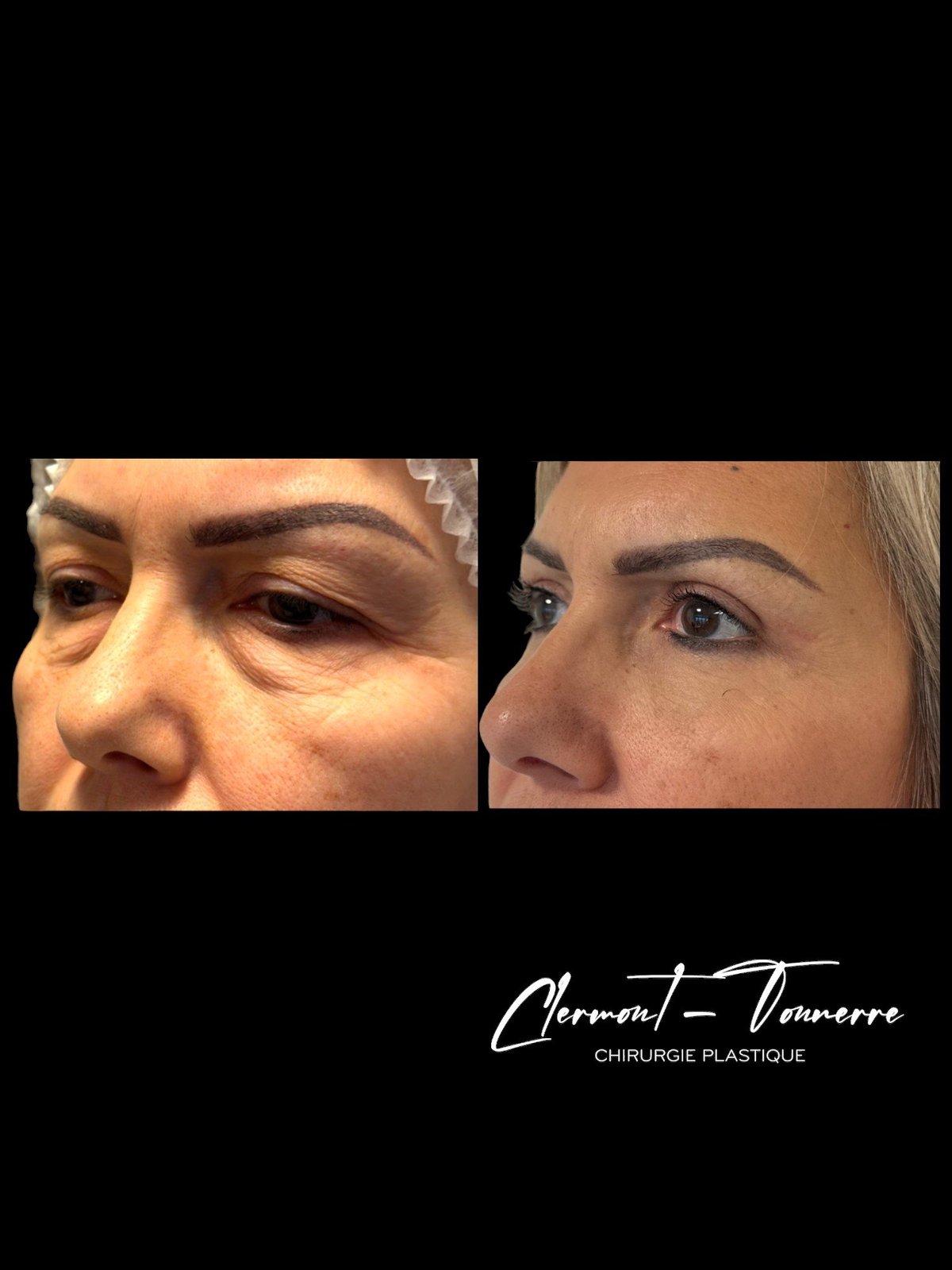
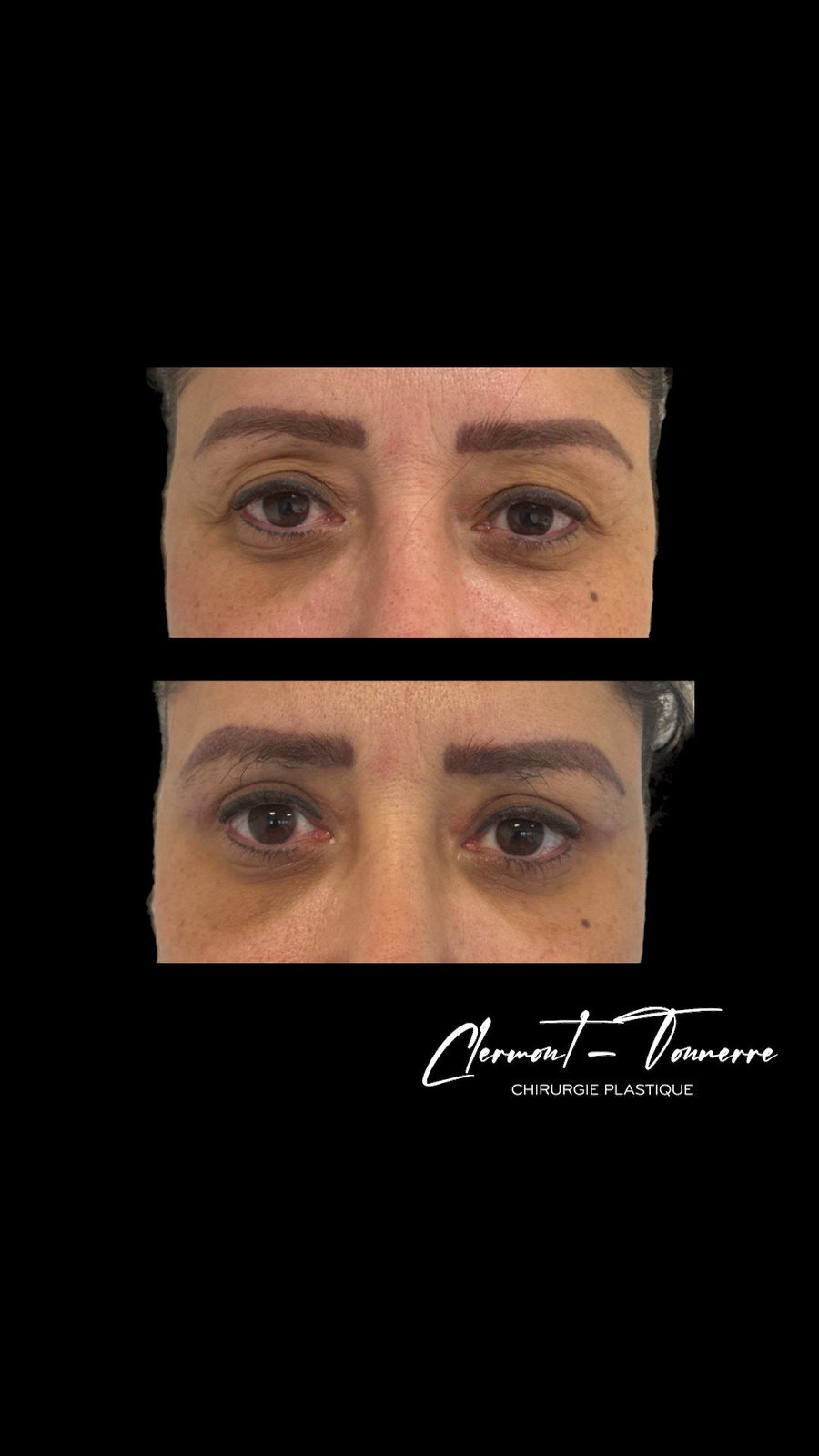
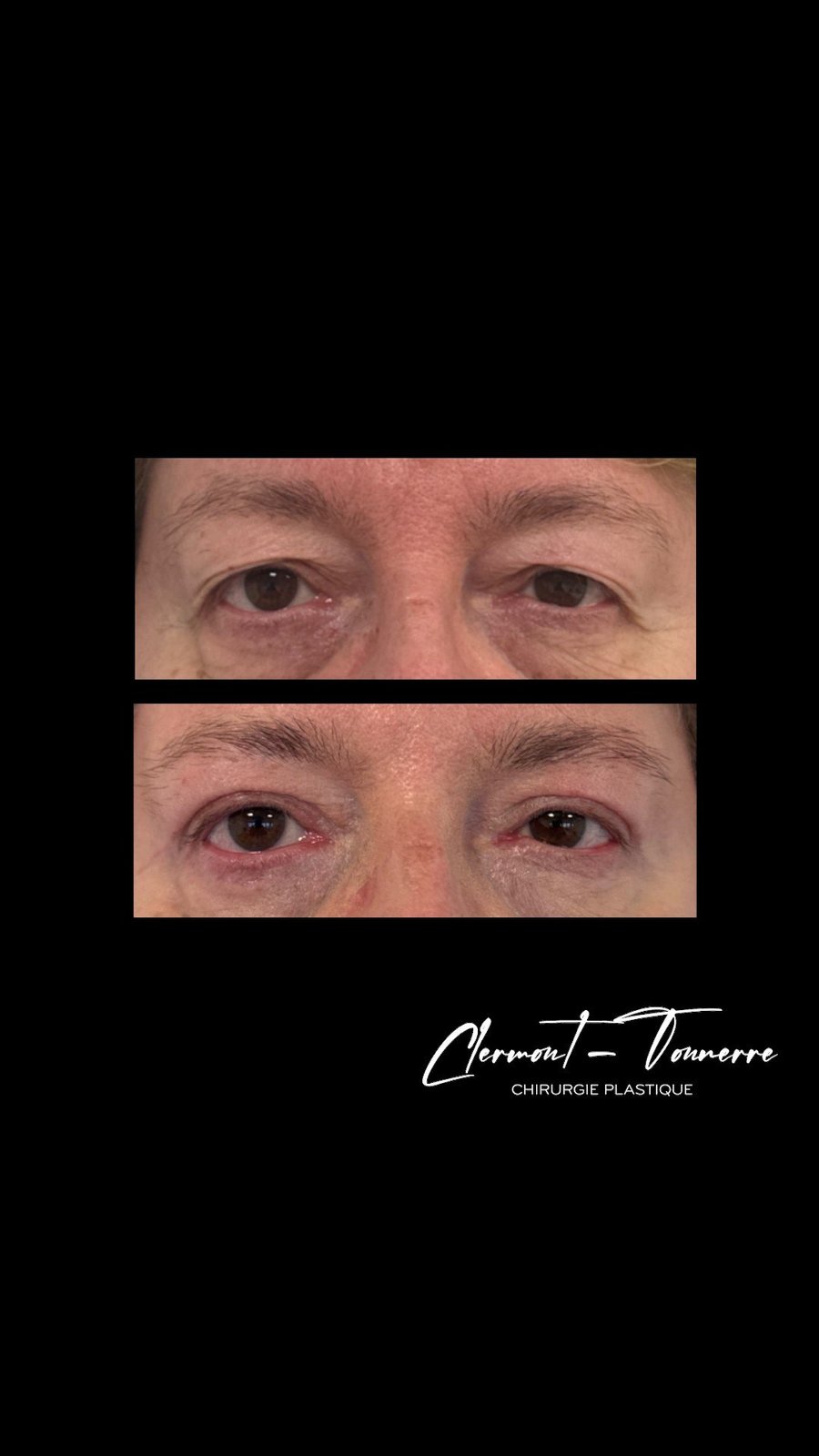
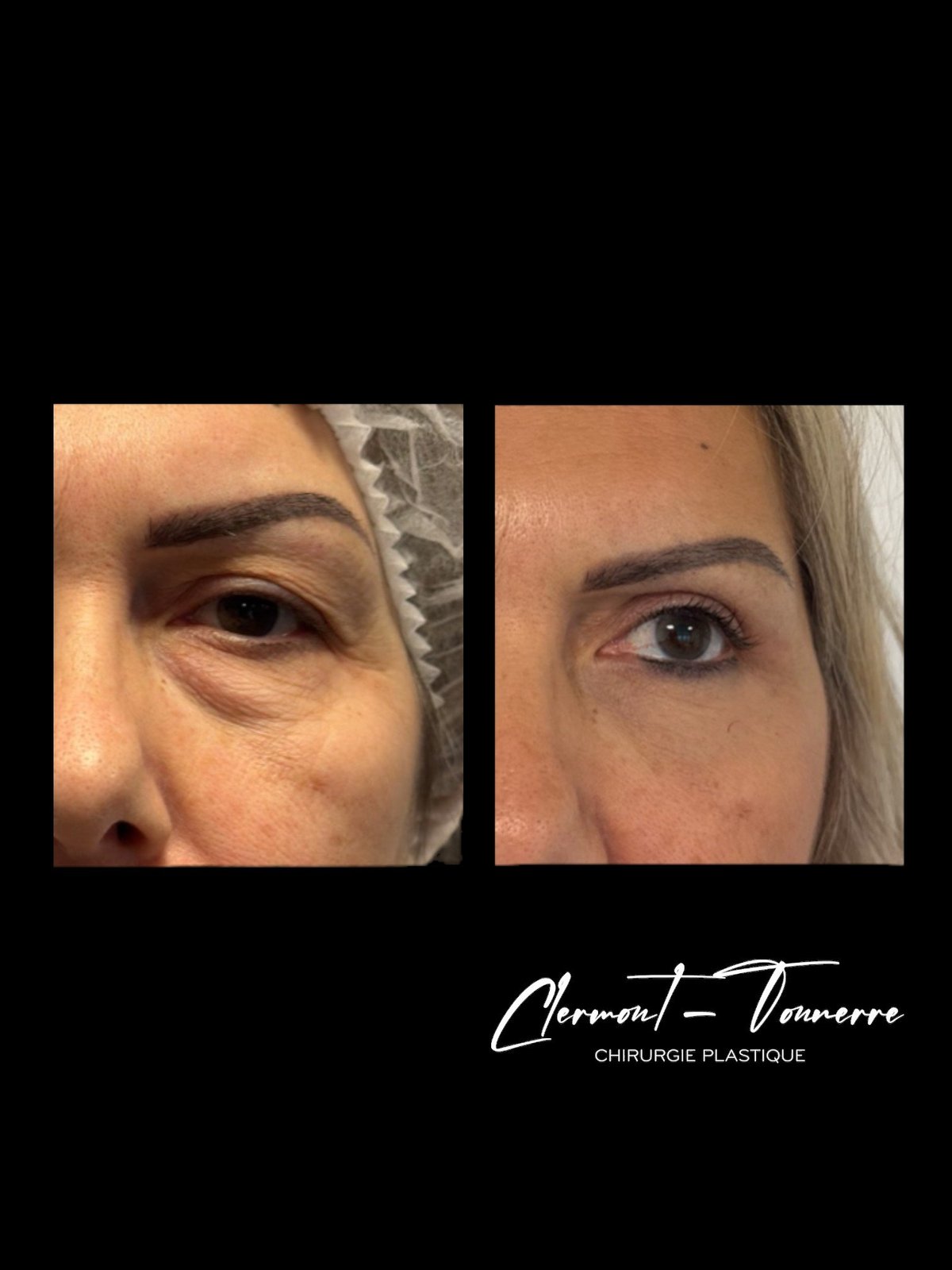
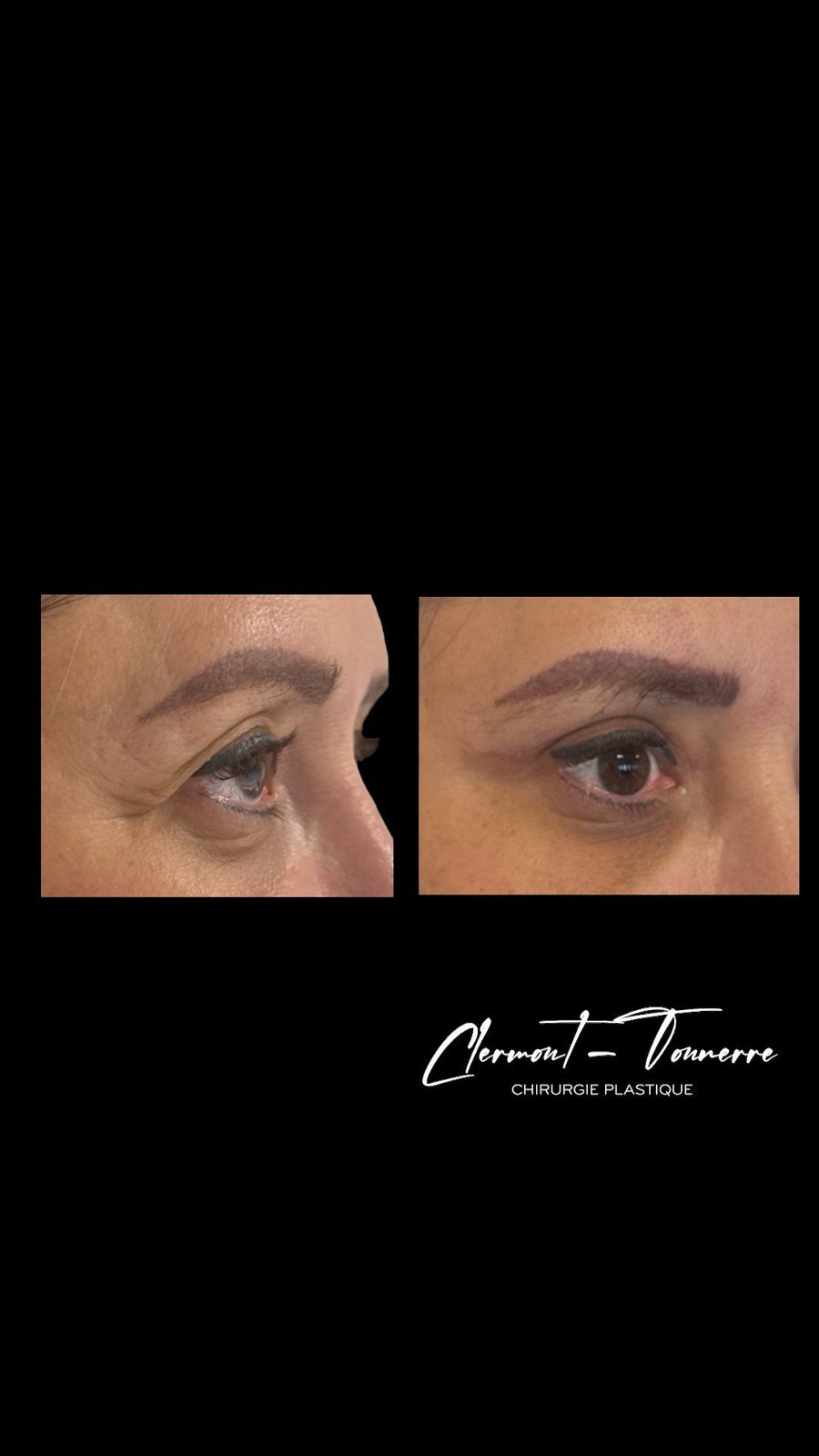
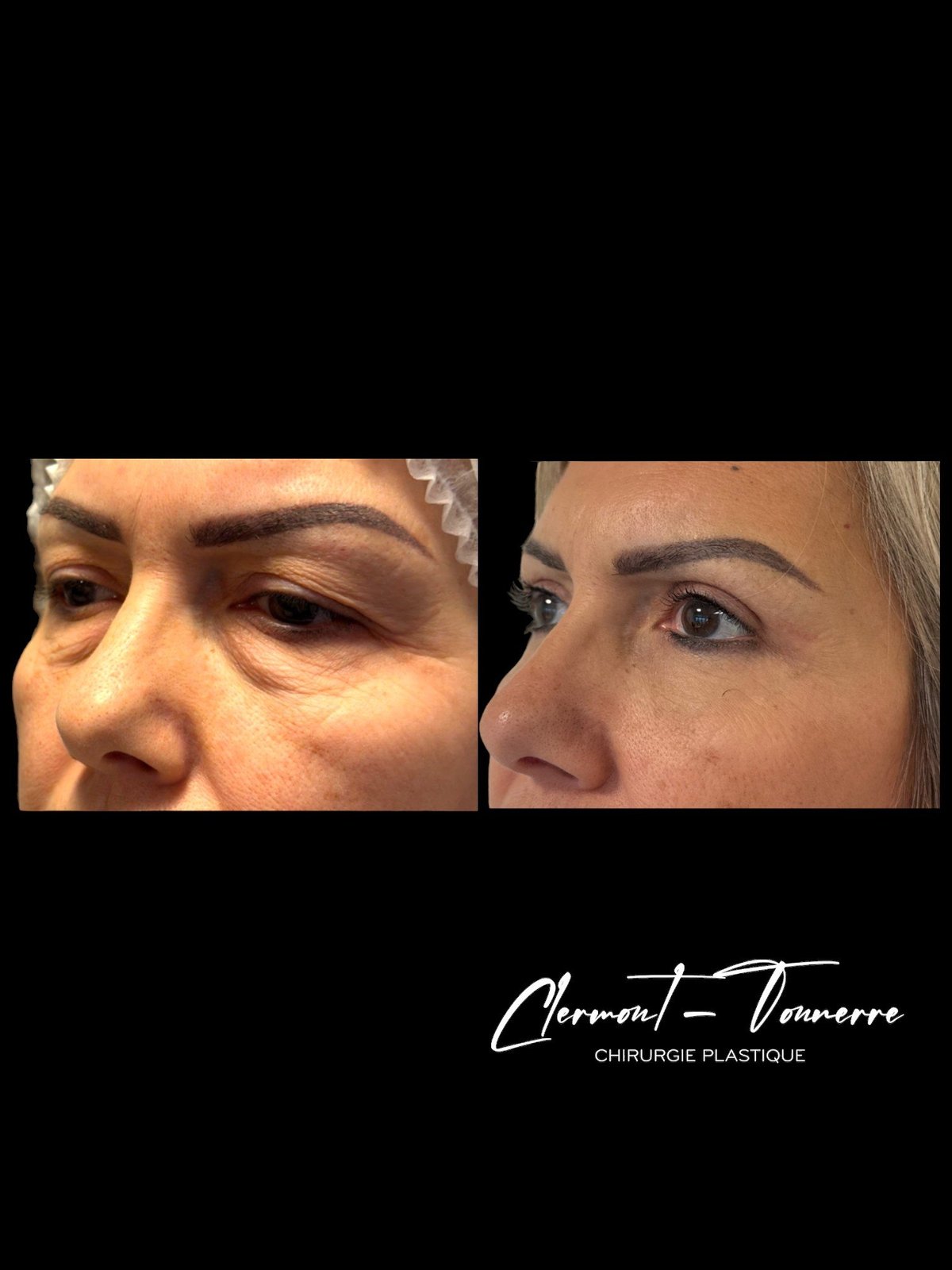
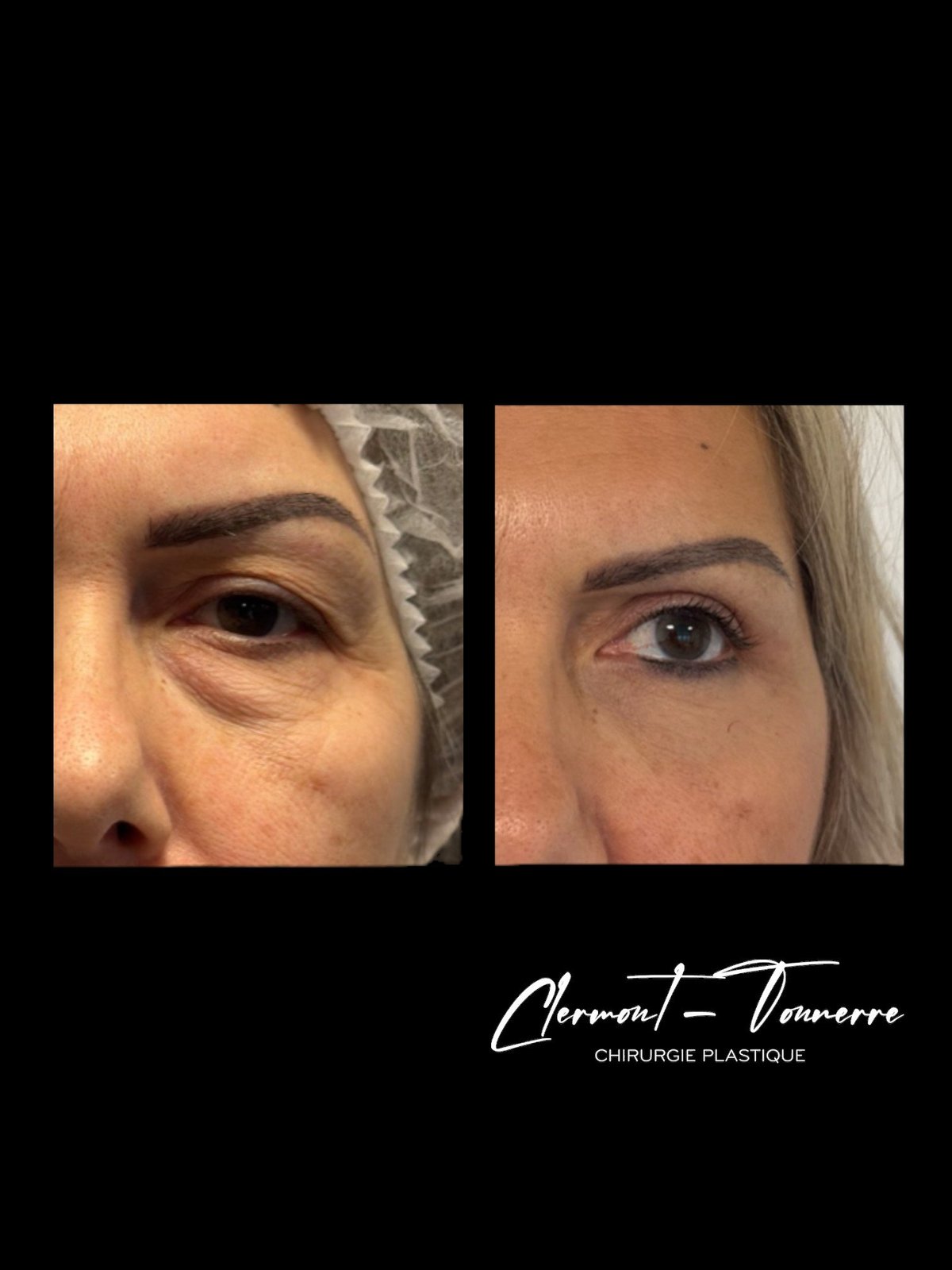
Avant / Après
Blepharoplasty
Photos de patients du Dr. de Clermont-Tonnerre, partagées avec leur accord. Les résultats varient selon les individus et leur morphologie.
Frequently asked questions
What is blepharoplasty?+
Is blepharoplasty covered by health insurance in France?+
Are the scars visible after blepharoplasty?+
Can blepharoplasty be performed under local anaesthesia?+
How long do blepharoplasty results last?+
What is the difference between upper and lower blepharoplasty?+
How long is the recovery after blepharoplasty?+
When can contact lenses be worn again after surgery?+
Can blepharoplasty be combined with a facelift?+
Are there non-surgical alternatives to blepharoplasty?+
What does a natural blepharoplasty result look like?+
Patient testimonials
“My drooping eyelids made me look tired. Blepharoplasty with Dr. de Clermont-Tonnerre rejuvenated my gaze by 10 years. The scars are in the creases and are absolutely invisible at 6 months.”
Françoise
“I had significant under-eye bags for years. The procedure went perfectly under local anaesthesia. Recovery was quick and the result is remarkable. I highly recommend.”
Odile
“My upper blepharoplasty was covered by French health insurance as my vision was impaired. Dr. de Clermont-Tonnerre was highly professional. My gaze is now open and natural.”
Bernard