Dr. de Clermont-TonnerrePlastic Surgeon

Paris 16th & Pontoise (95)

Rhinoplasty

Nose surgery — Paris 16th & Pontoise

Rhinoplasty is one of the most complex and delicate procedures in facial surgery. It enables the shape, size and contours of the nose to be modified for a harmonious, natural result. Whether correcting a nasal bump, straightening a deviation, refining the tip or improving breathing, Dr. de Clermont-Tonnerre guides you with precision and expertise in Paris 16th and Pontoise.

Book a consultation

Step by step

How the procedure works

01

Morphological consultation

Analysis of your nose in relation to the rest of your face. Computer simulation of possible outcomes. Discussion of objectives and anatomical limitations.

02

Pre-operative assessment

ENT assessment if functional indication. Standardised photographs. Anaesthetic consultation. Mandatory 15-day reflection period.

03

Surgical procedure

Under general anaesthesia, duration 2 to 3 hours. Closed approach (internal incisions only) or open approach (small columellar incision). Osteotomies, cartilage reshaping, tip refinement.

04

Immediate postoperative course

Nasal splint worn for 10 days. Swelling and bruising for 10 to 15 days. Temporary mouth breathing. One night's hospitalisation.

05

Long-term follow-up

Splint removal at day 10. Follow-up consultations at 1 month, 3 months, 6 months and 1 year. Definitive result achieved at 12–18 months.

At a glance

Duration
2 to 3 hours
Anaesthesia
General
Hospitalisation
1 night
Time off work
10 to 15 days
Contact sports
Avoid for 3 months
Definitive result
12 to 18 months

Advantages

  • Precise correction of nasal anomalies
  • Natural, harmonious result in keeping with the face
  • Possible improvement of breathing (rhinoseptoplasty)
  • Invisible or minimal scarring
  • Permanent results
  • Significant boost to self-confidence

Risks

  • Prolonged swelling and bruising
  • Residual asymmetry
  • Skin or cartilage irregularities
  • Voice change (rare)
  • Aesthetic dissatisfaction requiring revision
  • Columellar scar (open approach)

Insurance & Reimbursement

Purely aesthetic rhinoplasty is not reimbursed. However, if your procedure includes a septoplasty (correction of a deviated septum with documented nasal obstruction), the functional component may be covered by French national health insurance after an ENT assessment and prior approval from the CPAM.

Expected results

Rhinoplasty produces a nose that is harmonious and proportionate to the rest of the face. The ideal result is a nose that goes unnoticed — one that integrates naturally into the facial features. Patient satisfaction is high when expectations are realistic and clearly discussed during the consultation.

Résultats

Avant / Après

Rhinoplasty

Photos de patients du Dr. de Clermont-Tonnerre, partagées avec leur accord. Les résultats varient selon les individus et leur morphologie.
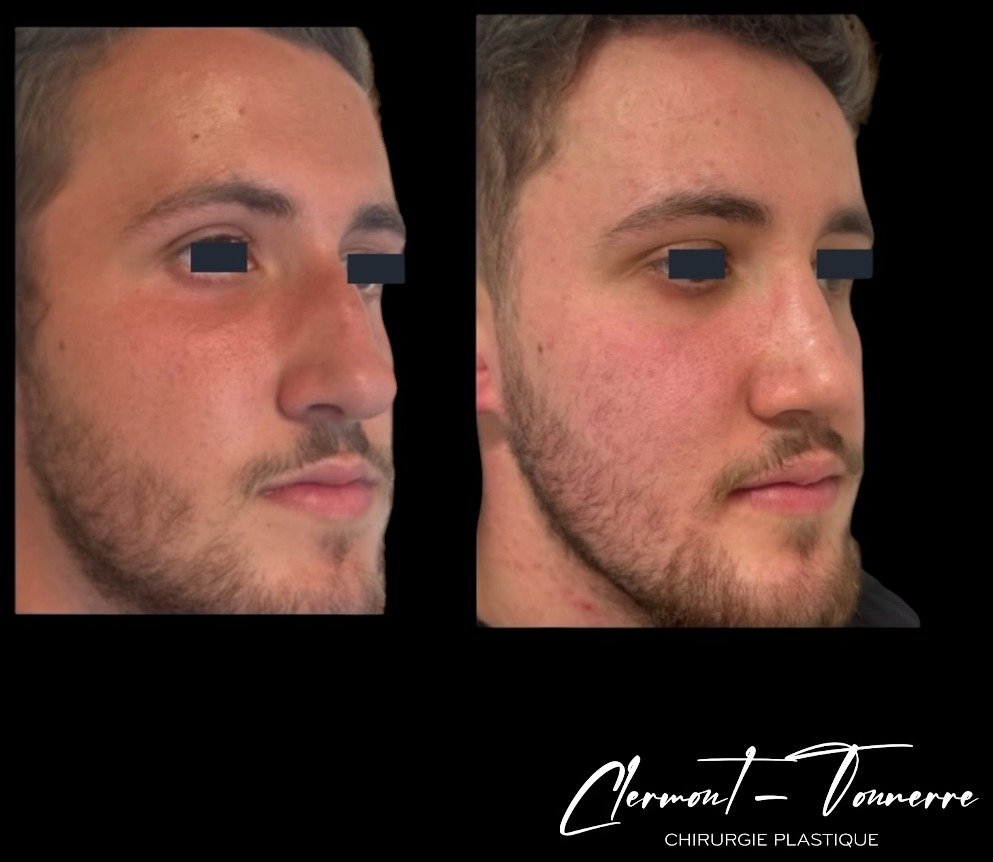
Before after rhinoplasty male — profile — Dr. de Clermont-Tonnerre Paris
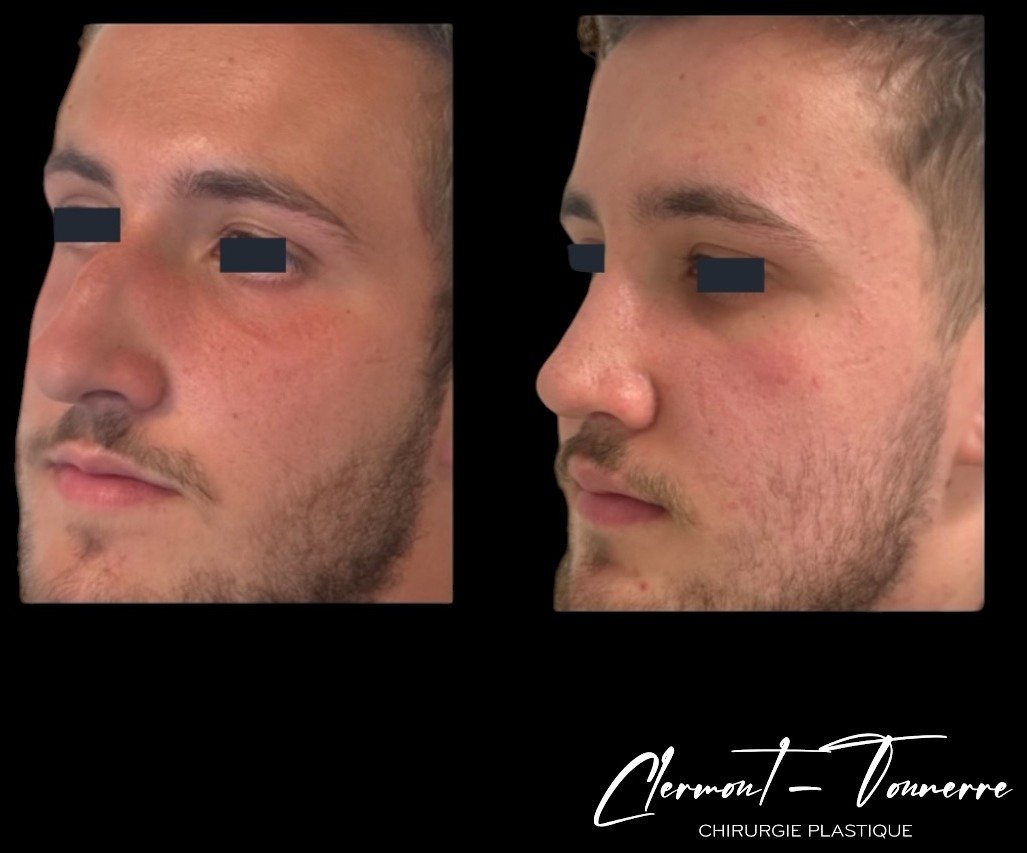
Before after rhinoplasty male — 3/4 view — Dr. de Clermont-Tonnerre Paris
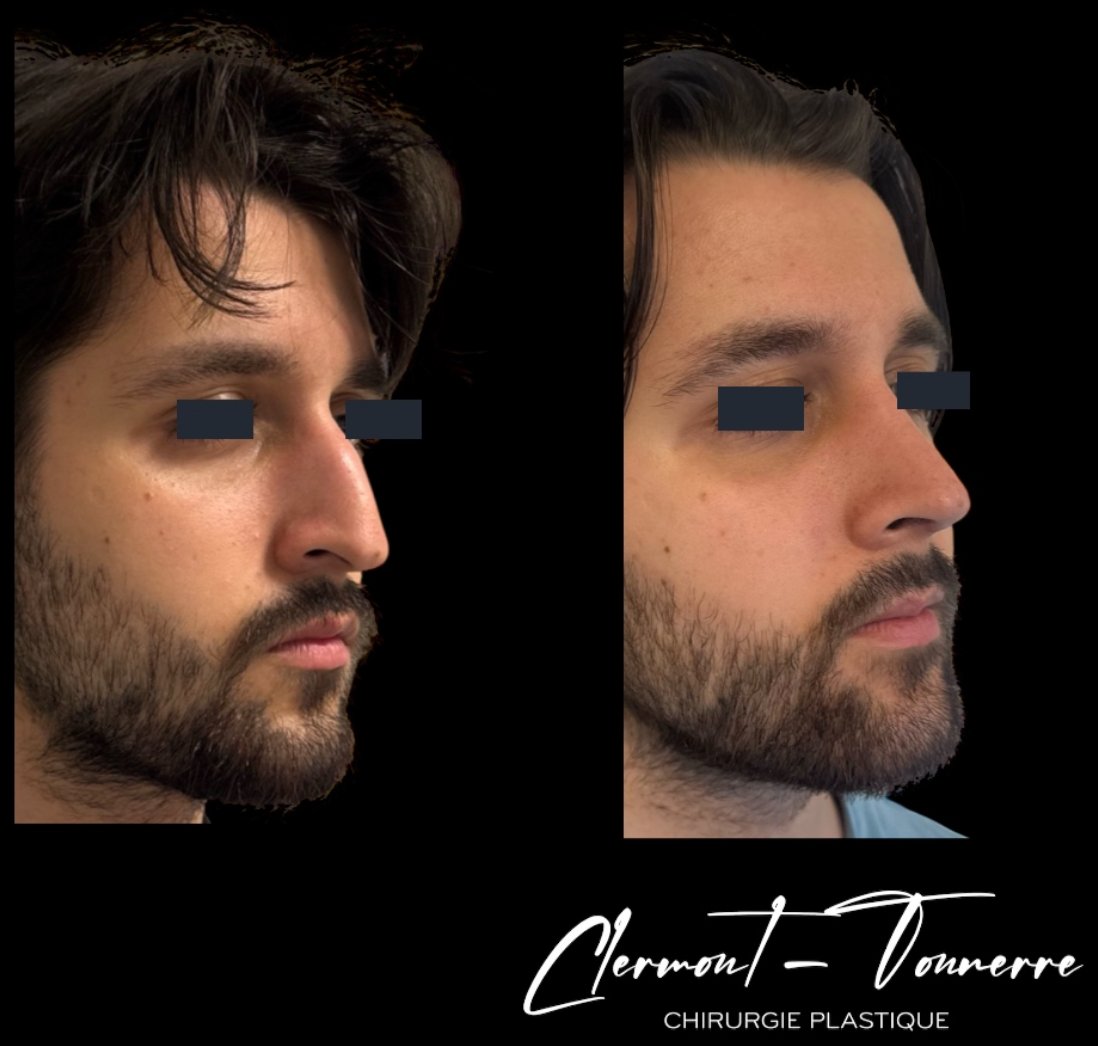
Before after male rhinoplasty — profile — Dr. de Clermont-Tonnerre Paris
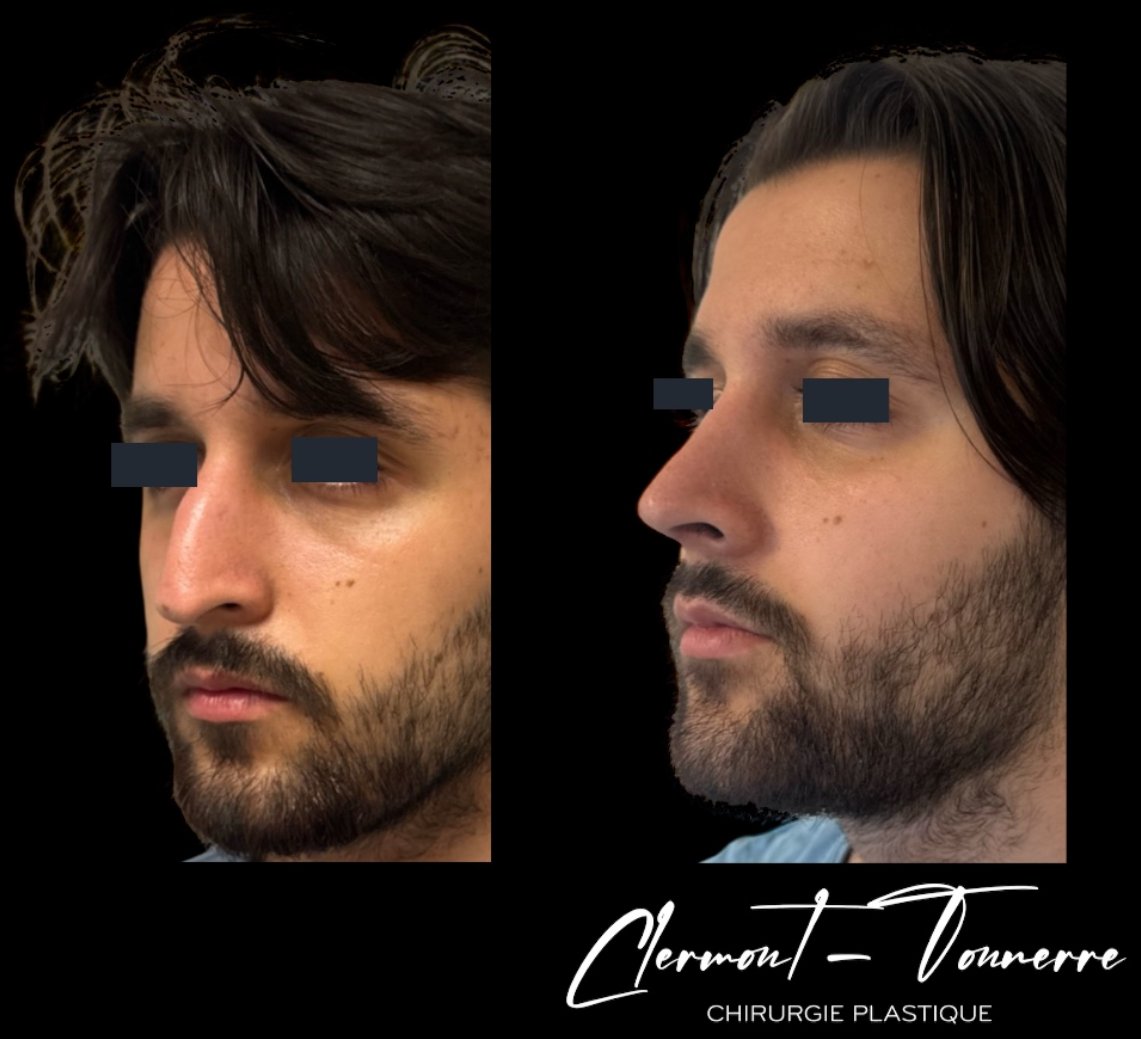
Before after male rhinoplasty — 3/4 view — Dr. de Clermont-Tonnerre Paris

Frequently asked questions

What is the difference between rhinoplasty and rhinoseptoplasty?+
Rhinoplasty is a procedure with a purely aesthetic aim, reshaping the nose structures (dorsum, tip, columella, nostrils). Rhinoseptoplasty combines aesthetic correction with correction of a deviated septum (septoplasty), which can cause nasal obstruction. The functional component of a rhinoseptoplasty may be partially reimbursed by French national health insurance.
Is rhinoplasty covered by French health insurance?+
Purely aesthetic rhinoplasty is not reimbursed. However, if the procedure is combined with a functional correction (documented deviated septum with nasal obstruction), the functional part (septoplasty) may be covered. A prior ENT assessment is required to document the functional impairment.
When can I see the final result of a rhinoplasty?+
The definitive result of a rhinoplasty is visible at 12 to 18 months. Swelling resolves gradually: at 1 month approximately 70% of the swelling has gone; at 6 months, 90%; the remaining 10% can take 12 to 18 months to resolve, particularly at the nasal tip.
What is the minimum age for rhinoplasty?+
It is advisable to wait until skeletal growth is complete — around 17 to 18 years of age for girls and 18 to 19 years for boys. Below this age, aesthetic rhinoplasty is not indicated, except in cases of trauma or severe congenital deformity.
Is rhinoplasty painful?+
Rhinoplasty is performed under general anaesthesia and is therefore painless during the procedure. The postoperative course involves significant swelling and bruising beneath the eyes for 10 to 15 days, as well as temporary nasal congestion. Pain is generally mild and well controlled with standard analgesics.
Open vs. closed rhinoplasty: what are the differences?+
The closed approach uses incisions entirely inside the nostrils, with no external visible scar. It is suitable for moderate corrections. The open approach adds a small incision across the columella (the strip of tissue between the nostrils), providing complete exposure of the nasal structures and allowing more precise and complex corrections. The surgeon selects the technique best suited to each individual case.
What is non-surgical rhinoplasty?+
Non-surgical rhinoplasty involves injecting hyaluronic acid to reshape the nose without surgery: smoothing a minor bump, refining the tip, harmonising proportions. Results are immediate but temporary (12 to 18 months) and cannot reduce nasal volume. It is an interesting alternative for patients who do not wish to undergo surgery.
Can rhinoplasty be performed after an accident or fracture?+
Yes, reconstructive rhinoplasty is well indicated following nasal trauma that has caused aesthetic or functional deformity. It is advisable to wait 6 to 12 months after the trauma to allow the tissues to stabilise. The functional component (post-traumatic deviated septum) may be covered by French national health insurance.
Can I smoke before and after rhinoplasty?+
It is essential to stop smoking at least 4 weeks before surgery and not to resume for 4 weeks afterwards. Smoking impairs wound healing, increases the risk of necrosis and infection, and disrupts nasal microcirculation. Smoking cessation is a prerequisite for rhinoplasty under optimal safety conditions.
What is ethnic rhinoplasty?+
Ethnic rhinoplasty refers to the adaptation of surgical technique to the anatomical characteristics associated with the patient's background (thick skin and soft cartilage in patients of African or Asian origin; strong dorsum in patients of Middle Eastern origin, etc.). The aim is to achieve a harmonious result that respects the patient's features and identity, without seeking to impose a single aesthetic standard.
What is a revision (secondary) rhinoplasty?+
Secondary rhinoplasty is a correction performed after an unsatisfactory or insufficient primary rhinoplasty. It is technically more complex due to scarring, tissue changes and possible cartilage loss. It may require cartilage grafts (from the septum, ear or ribs). It is advisable to wait 12 to 18 months after the first procedure before considering a revision.
When can the nasal splint be removed?+
The nasal splint (plaster or thermoplastic) is generally removed at day 10 by the surgeon at the follow-up appointment. It protects the osteotomies (bone cuts) and maintains the correction during the initial healing phase. Wearing it is mandatory and premature removal may compromise the result. After removal, any shocks or compression of the nose should be avoided for a further 4 to 6 weeks.

Patient testimonials

I had a nasal bump that had given me a complex since adolescence. The rhinoplasty with Dr. de Clermont-Tonnerre was transformative. The result is natural — nobody can tell I had surgery. I am delighted at 8 months post-op.

Lucie

I had a rhinoseptoplasty to correct both my deviated septum and the aesthetics of my nose. The result: I breathe much better and my nose is harmonious. Dr. de Clermont-Tonnerre is a true expert.

Élise

After an accident, my nose was deviated and broken. The reconstructive rhinoplasty restored a straight, functional nose. The follow-up was excellent. I recommend without hesitation to anyone considering this procedure.

Pierre