Paris 16th & Pontoise (95)
Otoplasty
Correction of prominent ears — Paris 16th & Pontoise
Otoplasty (prominent ear correction) is one of the most commonly performed plastic surgery procedures in children. It corrects excessive protrusion of the auricle relative to the skull — a common source of self-consciousness and teasing. Performed in Paris 16th and Pontoise by Dr. de Clermont-Tonnerre, it is covered by French national health insurance before the age of 18.
Book a consultationStep by step
How the procedure works
Consultation
Assessment of the auricles, measurement of the ear-to-skull angle, discussion of the desired result. Information on technique and scarring.
Pre-operative assessment
Standard blood tests. Anaesthetic consultation for children (general anaesthesia). Mandatory 15-day reflection period.
Procedure
General anaesthesia (children) or local (adults). Duration 1 to 1.5 hours. Incision behind the ear, cartilage reshaping, permanent sutures to maintain the correction.
Hospitalisation
Day case. Protective headband placed in theatre, to be worn 2 to 4 weeks.
Follow-up
Suture removal at day 10. Headband worn at night for a further 6 weeks. Definitive result at 6 months.
At a glance
- Duration
- 1 to 1.5 hours
- Anaesthesia
- General (children) / Local (adults)
- Hospitalisation
- Day case
- Time off school/work
- 7 to 10 days
- Definitive result
- 6 to 12 months
- Reimbursement
- Covered by French health insurance under 18
Advantages
- Permanent results from the first procedure
- Scar hidden behind the ear
- French health insurance coverage under 18
- Quick procedure (1 to 1.5 hours)
- Immediate boost to self-confidence
- Possible from age 6 to 7
Risks
- Post-operative haematoma
- Partial recurrence (very elastic cartilage)
- Residual asymmetry
- Retro-auricular scar palpable on touch
- Transiently palpable sutures
- Over-correction (pinched appearance)
Insurance & Reimbursement
Otoplasty is covered by French national health insurance before the age of 18, without any specific severity criterion. After the age of 18, it is considered aesthetic and remains at the patient's expense. It is therefore advisable to have the procedure during childhood or adolescence if possible.
Expected results
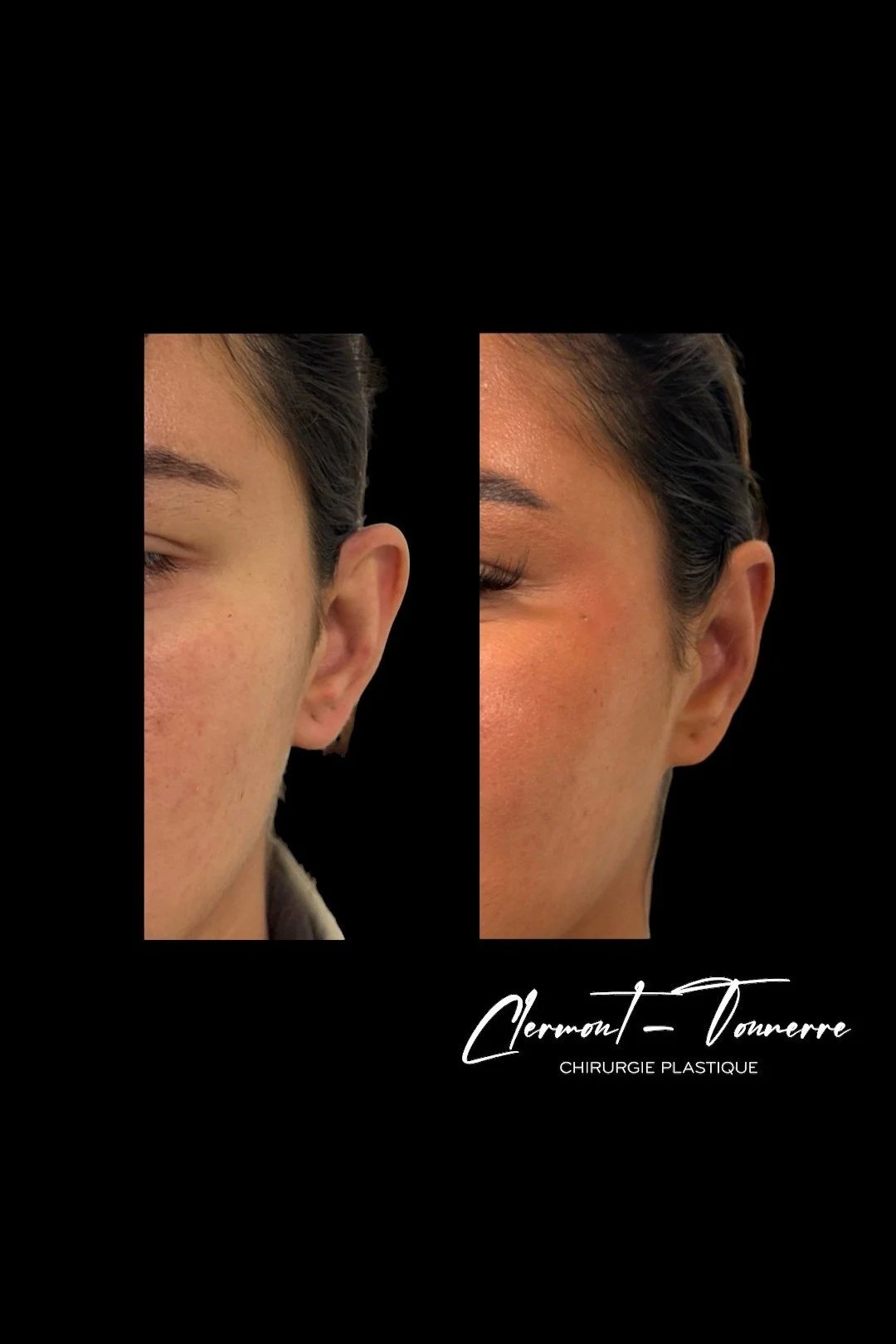
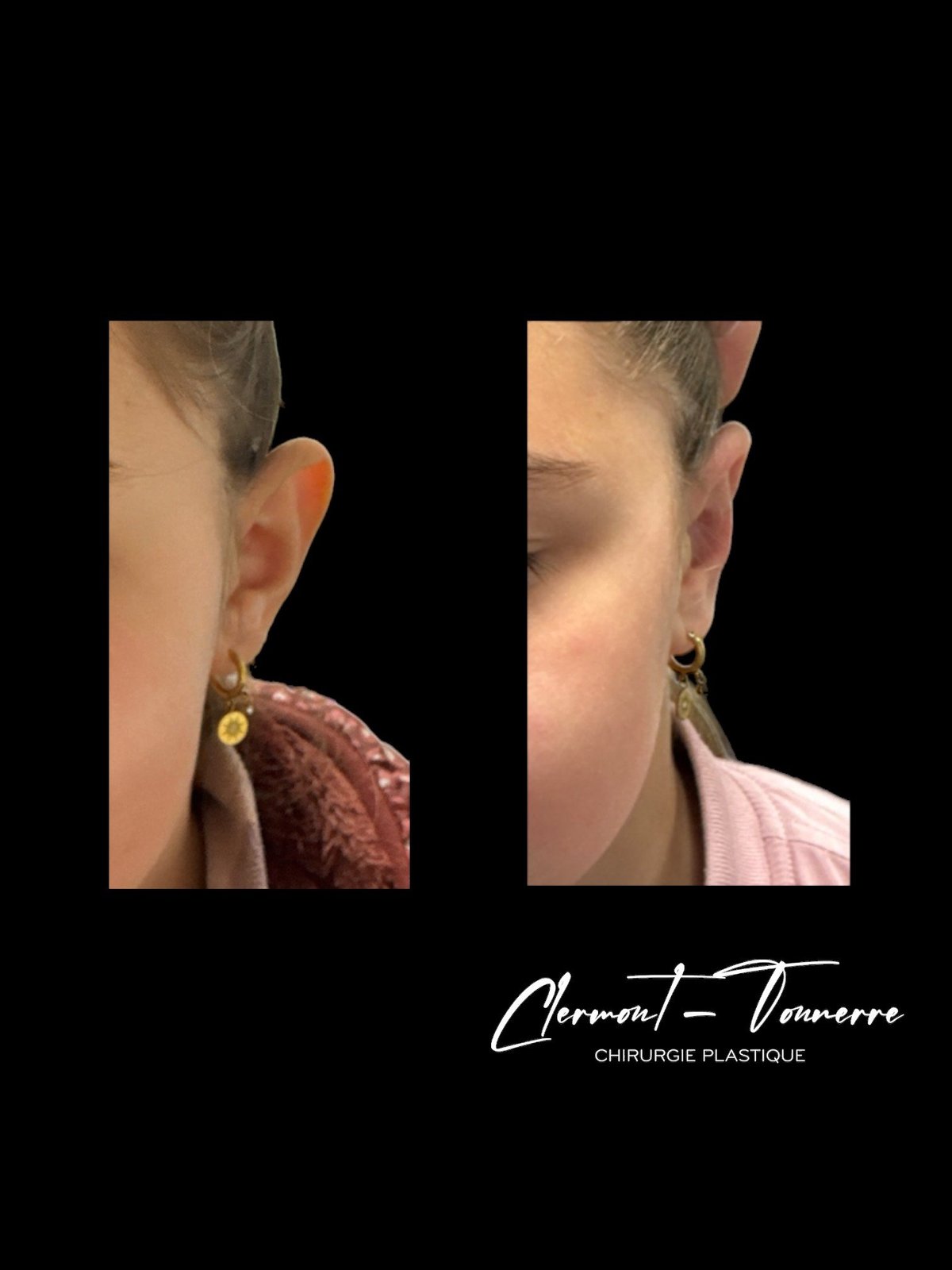
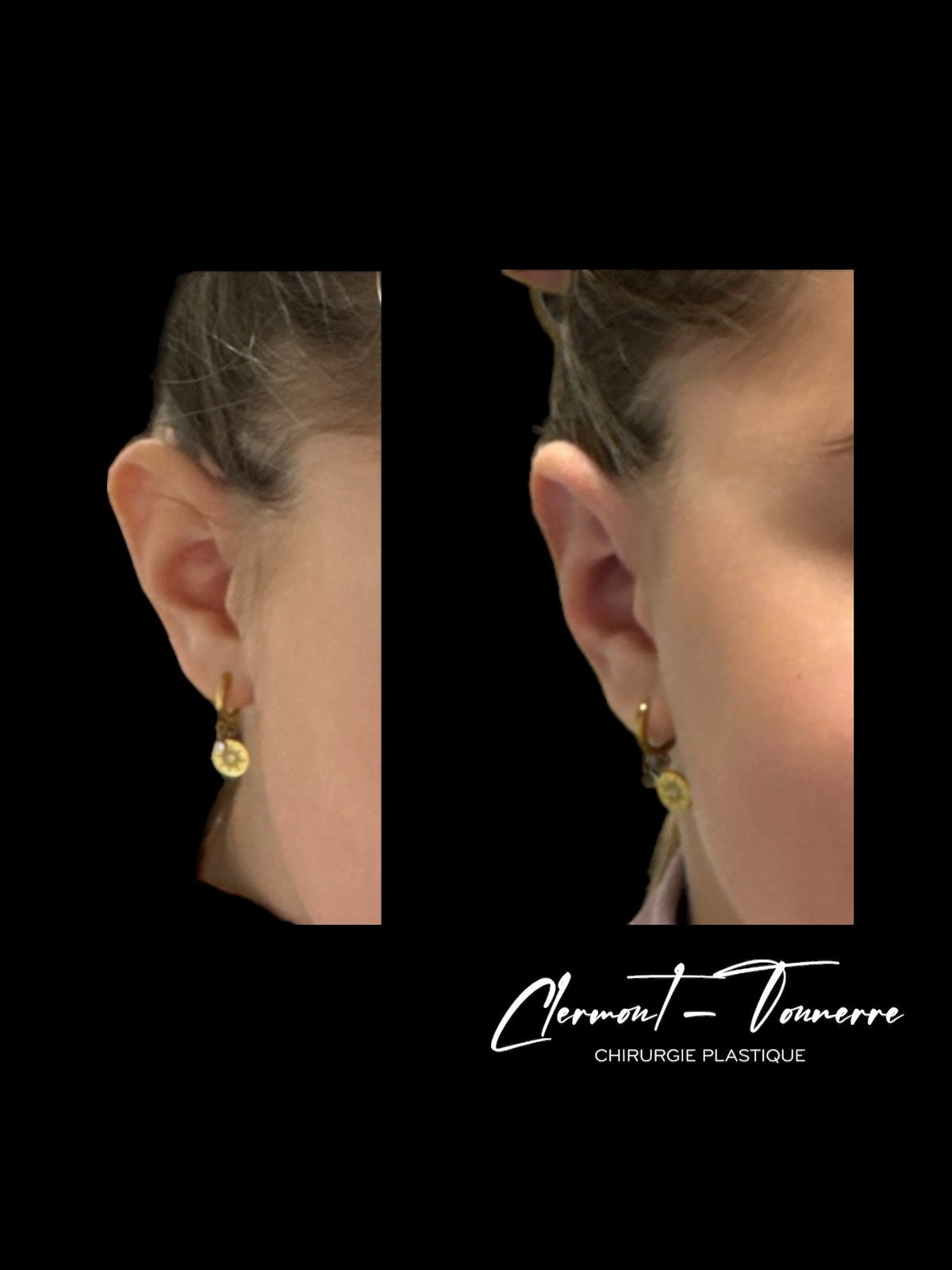
Otoplasty provides a definitive, natural correction of auricular protrusion. The ear regains a harmonious angle relative to the skull and the auricles are symmetrical. The psychological impact is immediate and very positive, particularly for children who regain self-confidence.
Résultats
Avant / Après
Otoplasty
Photos de patients du Dr. de Clermont-Tonnerre, partagées avec leur accord. Les résultats varient selon les individus et leur morphologie.
Frequently asked questions
Is otoplasty covered by French health insurance?+
From what age can prominent ears be corrected?+
Is otoplasty painful?+
What are the scars like after otoplasty?+
Are otoplasty results permanent?+
From what age can ear correction be performed in children?+
Can both ears be operated at the same time?+
How long do otoplasty results last?+
Is there a risk of recurrence (ears springing back)?+
When can sport be resumed after otoplasty?+
Patient testimonials
“My son was being teased at school because of his ears. Otoplasty with Dr. de Clermont-Tonnerre at age 8 changed his life. The operation went very smoothly, the French health insurance coverage was straightforward. He is flourishing now.”
Lucas (parent)
“I had waited until the age of 25 to have the operation. The consultation with Dr. de Clermont-Tonnerre convinced me. The procedure under local anaesthesia went very well. My appearance is now in line with my self-image.”
Rémi
“My 10-year-old daughter had both ears operated. Dr. de Clermont-Tonnerre was exemplary in his patience and gentleness with her. The result is natural and her self-confidence has completely changed.”
Sophie (parent)