Dr. de Clermont-TonnerrePlastic Surgeon

Paris 16 & Pontoise (95)

Carcinoma Excision

Basal Cell & Squamous Cell — Paris 16 & Pontoise

Skin carcinoma (basal cell or squamous cell) is the most common skin cancer. When treated early, it is cured in the vast majority of cases by surgery. Dr. de Clermont-Tonnerre performs excision with appropriate margins and careful aesthetic reconstruction, in Paris 16 and Pontoise.

Book an Appointment

Basal Cell Carcinoma

The most common

Represents 70% of skin cancers. Grows slowly on sun-exposed areas (face, ears, neck). Pearlescent or ulcerated appearance. Almost never metastasises. Cured in nearly all cases by surgical excision.

  • Margins 3–5 mm
  • Immediate reconstruction
  • Histopathological analysis
  • Day surgery

Squamous Cell Carcinoma

More aggressive

Represents 20% of skin cancers. May develop from a pre-existing lesion (actinic keratosis). Metastatic risk is low but real. Requires wider excision margins and lymph node follow-up when indicated.

  • Margins 5–10 mm per grade
  • Sentinel node when indicated
  • Coordinated oncological follow-up
  • Reconstruction per defect

Procedure

01

Consultation & Assessment

Evaluation of the lesion, dermoscopy if necessary, coordination with the referring dermatologist. Definition of margins and reconstruction technique.

02

Procedure under Local Anaesthesia

Tumour excision with appropriate margins. Specimen sent for intraoperative or deferred histopathology. Reconstruction by direct closure, local flap or skin graft according to defect size.

03

Histopathological Result

Margin quality confirmed at day 7–14. If margins are involved, surgical revision is discussed with the multidisciplinary team.

04

Dermatological Follow-up

Regular monitoring by the dermatologist to screen for new lesions. Strict photoprotection recommended.

Practical Information

Anaesthesia
Local (day surgery)
Duration
30 min to 2 hours depending on reconstruction
Time off work
2 to 7 days depending on location
Reimbursement
Covered by French national health insurance
Fee
From €400

Clinical Examples

What Does a Carcinoma Look Like?

Skin carcinoma can present in various forms. These images illustrate typical lesions for educational purposes only. Only a doctor can establish a diagnosis.
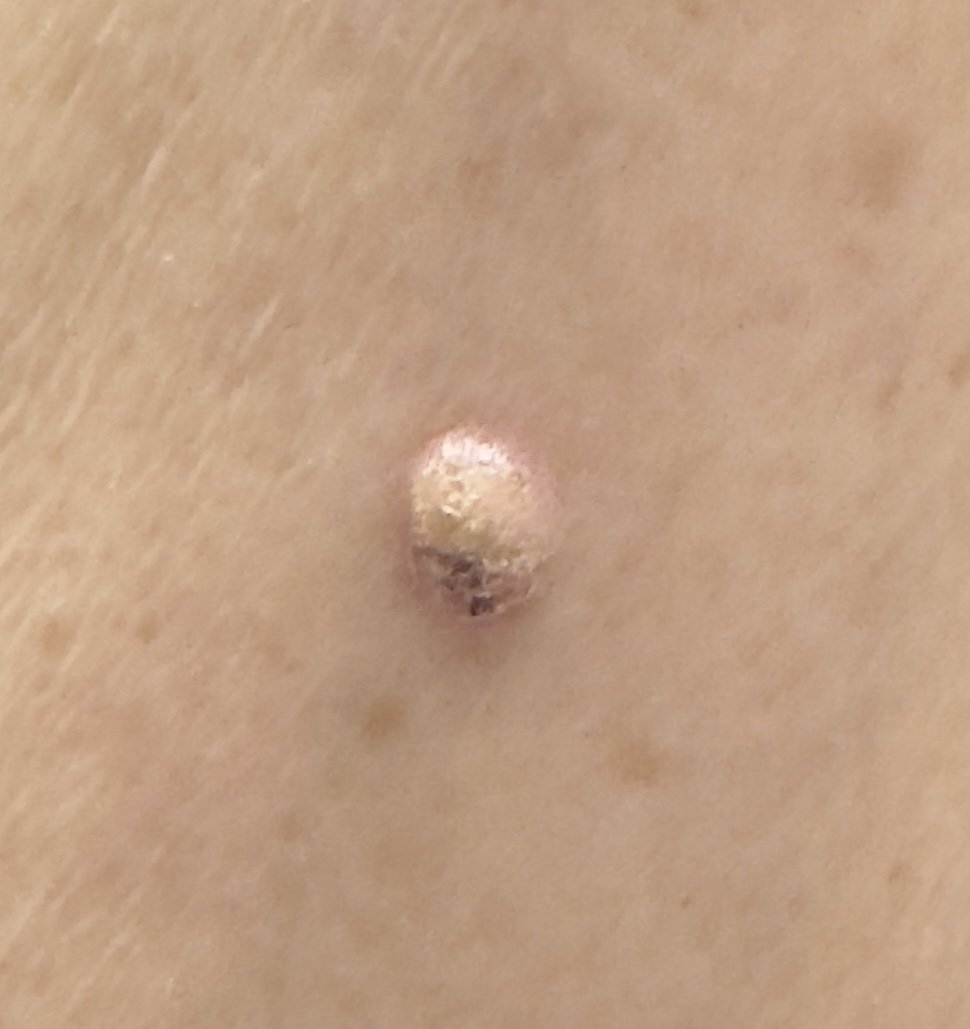
Clinical example of a skin lesion — cutaneous carcinoma

These images are presented for educational purposes. If in doubt about a lesion, consult a doctor promptly.

Frequently Asked Questions

What is the difference between basal cell and squamous cell carcinoma?+
Basal cell carcinoma (BCC) is the most common skin cancer (approximately 70% of skin cancers). It grows slowly, almost never metastasises and is cured in nearly all cases by surgery with 3 to 5 mm margins. Squamous cell carcinoma (SCC) is more aggressive, can metastasise and requires wider excision margins (6 to 10 mm) with appropriate lymph node follow-up. Both are favoured by chronic sun exposure.
What are the recommended excision margins?+
Excision margins depend on the type and grade of carcinoma: for basal cell carcinoma, HAS guidelines recommend margins of 3 to 5 mm peripherally and in depth. For squamous cell carcinoma, margins are 6 to 10 mm depending on histological grade and location. These margins are confirmed by histopathological analysis of the surgical specimen.
How does carcinoma excision proceed?+
The procedure is performed under local anaesthesia as a day case in most situations. The surgeon removes the tumour with appropriate safety margins (3 to 10 mm depending on type), then closes the wound by direct suture, a local flap or a skin graft depending on the size of the defect. The surgical specimen is sent for histopathology to confirm complete removal and histological type.
Is reconstruction needed after excision?+
Depending on the size and location of the carcinoma, reconstruction may range from a simple direct closure (small lesions) to a local skin flap (sensitive areas such as the face, nose, eyelids) or a skin graft (larger defects). Dr. de Clermont-Tonnerre, a specialist in plastic surgery, plans the most appropriate reconstruction to balance oncological and aesthetic outcomes.
Do I need a dermatologist referral?+
No, you can consult Dr. de Clermont-Tonnerre directly. He works in close collaboration with your dermatologist to ensure comprehensive multidisciplinary care. If a diagnostic biopsy has already been performed by your dermatologist, please bring the histopathological report to the surgical consultation.
Is skin carcinoma treatment covered by health insurance?+
Yes, the entire surgical management of skin carcinoma (excision, reconstruction, histopathological analysis) is reimbursed at 100% by French national health insurance. For high-risk squamous cell carcinoma, long-term condition (ALD) status may be proposed to cover the full care pathway including oncological follow-up.
What will the scar look like after excision?+
Dr. de Clermont-Tonnerre pays particular attention to the aesthetic outcome of reconstruction. The scar is oriented along the natural tension lines of the face or body for maximum discretion. Its length depends on the size of the tumour and the reconstruction technique chosen. It fades progressively over 12 to 18 months.
Is there a risk of recurrence?+
When excision is complete (clear margins confirmed by histopathology), the risk of local recurrence is low for BCC (below 5%). For SCC, the risk depends on histological grade and location. Regular annual dermatological follow-up is recommended to monitor for new lesions, as the underlying skin type often predisposes to multiple carcinomas over time.
Is sun exposure the main cause of skin carcinomas?+
Yes, cumulative sun exposure over a lifetime is the main risk factor for skin carcinomas (BCC and SCC). The most affected areas are sun-exposed zones: face, ears, neck, scalp, hands and forearms. Immunocompromised patients (transplant recipients, those on biotherapy) are at particularly high risk of SCC. Strict photoprotection (SPF 50+, protective clothing) is recommended for life after diagnosis.
Is follow-up required after carcinoma excision?+
Yes, annual dermatological surveillance is recommended for life after skin carcinoma excision. It includes a full clinical examination with dermoscopy, inspection of the scar to detect local recurrence, and monitoring of regional lymph nodes for SCC. Dr. de Clermont-Tonnerre coordinates this follow-up with your referring dermatologist.