What is the difference between a keloid and a hypertrophic scar?+
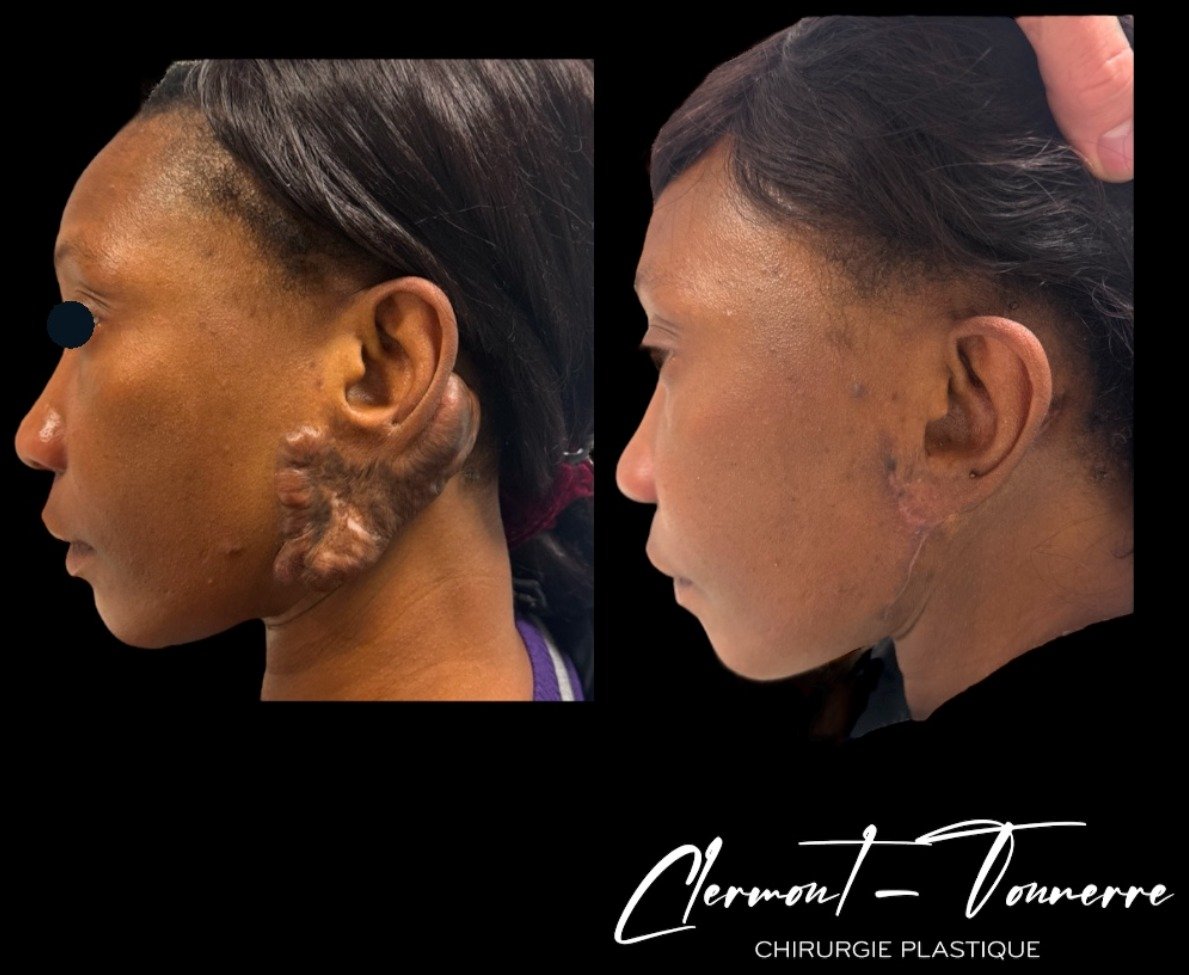
A hypertrophic scar remains within the boundaries of the original wound, is red and raised, and may improve spontaneously over 12 to 18 months. A keloid scar extends beyond the boundaries of the original wound, grows progressively into surrounding healthy tissue, never regresses spontaneously and tends strongly to recur after treatment. Both are benign but often cause functional and aesthetic discomfort.
Who is at risk of keloids?+
Keloids are significantly more common in darker skin types (phototypes IV to VI), particularly in people of African, Caribbean or Asian origin. Certain locations are particularly at risk: the chest, shoulders, nape of the neck and earlobes. A personal or family history of keloids is a major risk factor. Dr. de Clermont-Tonnerre systematically evaluates this risk at every pre-operative consultation to propose an appropriate preventive protocol.
Why is surgery alone insufficient to treat a keloid?+
Surgery alone for a keloid is associated with an extremely high recurrence rate, estimated at approximately 80%. The new surgical scar stimulates the same abnormal fibrotic process that led to the initial keloid. This is why keloid treatment requires a mandatory combined approach: surgical excision, intra-lesional corticosteroid injections, silicone gel or sheet compression, and sometimes adjuvant radiotherapy within 24 hours post-operatively.
How many injection sessions are required?+
Intra-lesional corticosteroid injections (triamcinolone acetonide) are performed every 4 to 6 weeks, generally in 3 to 6 sessions depending on clinical response. They progressively flatten the scar and reduce associated itching, pain and tension. These injections can be used alone as first-line treatment for recent or moderate keloids, or as a complement to surgery for more significant forms.
Is the treatment permanent?+
Keloid treatment is complex as the recurrence rate remains significant even with an optimal combined protocol. The strategy combining surgical excision + intra-lesional corticosteroid injections + silicone sheet + adjuvant radiotherapy (in the most resistant cases) offers the best long-term results, with recurrence rates reduced to below 20%. Prolonged surveillance of 6 to 12 months is always necessary after treatment completion.
Is wearing silicone sheets really necessary?+
Yes, silicone gel or sheets (worn at least 12 hours per day for 6 to 12 months) are an essential element in the management of keloid and hypertrophic scars. Silicone creates an occlusive microclimate that hydrates the scar, reduces tension and inhibits excessive collagen production. Scientific evidence for their effectiveness is well established and international guidelines consistently include them in the multimodal protocol.
Is adjuvant radiotherapy safe for keloid treatment?+
Adjuvant radiotherapy (delivered within 24 hours of surgical excision) is a validated treatment for resistant keloids. The dose delivered is low and precisely targeted to the scar. Its use on sensitive areas (chest, abdomen) is discussed case by case with the radiotherapy team. The benefit-to-risk ratio is favourable for recurrent keloids with a significant impact on quality of life.
Can the formation of a keloid be prevented before an operation?+
In patients identified as at risk (phototypes IV–VI, personal or family history of keloids, chest or shoulder location), preventive measures can be implemented from the initial healing phase: early application of silicone gel from day 21, scar compression, strict photoprotection. In some cases, preventive corticosteroid injections may be proposed. Dr. de Clermont-Tonnerre integrates this preventive protocol into his post-operative care for at-risk patients.
Can keloids on earlobes be treated?+
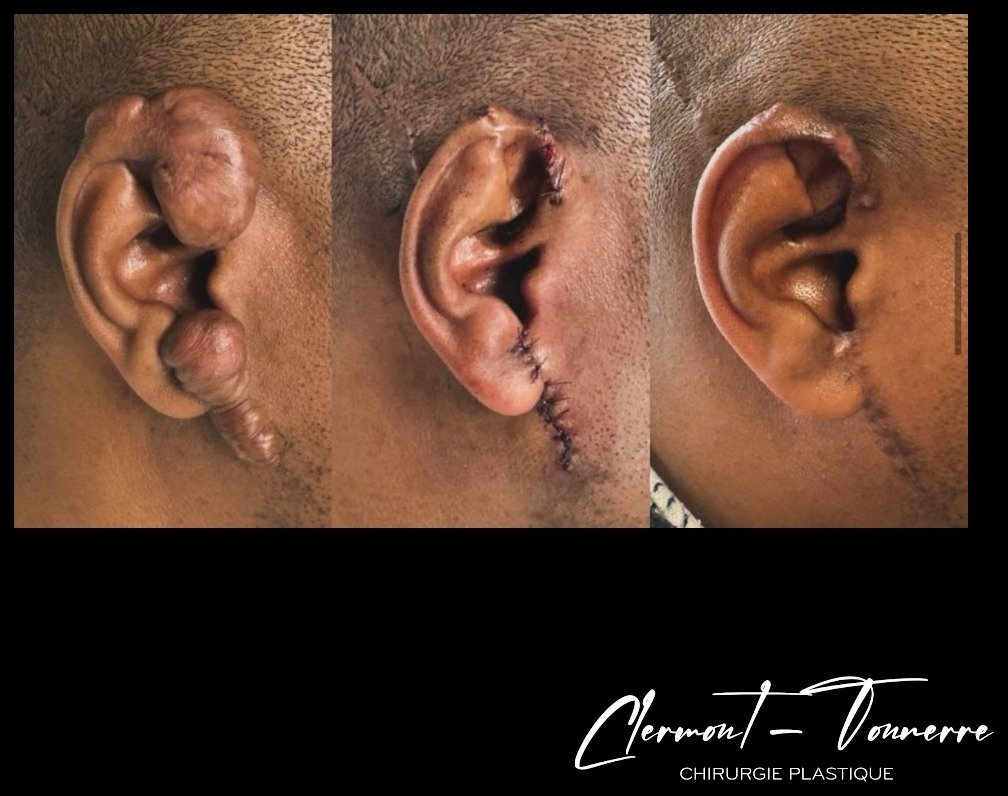
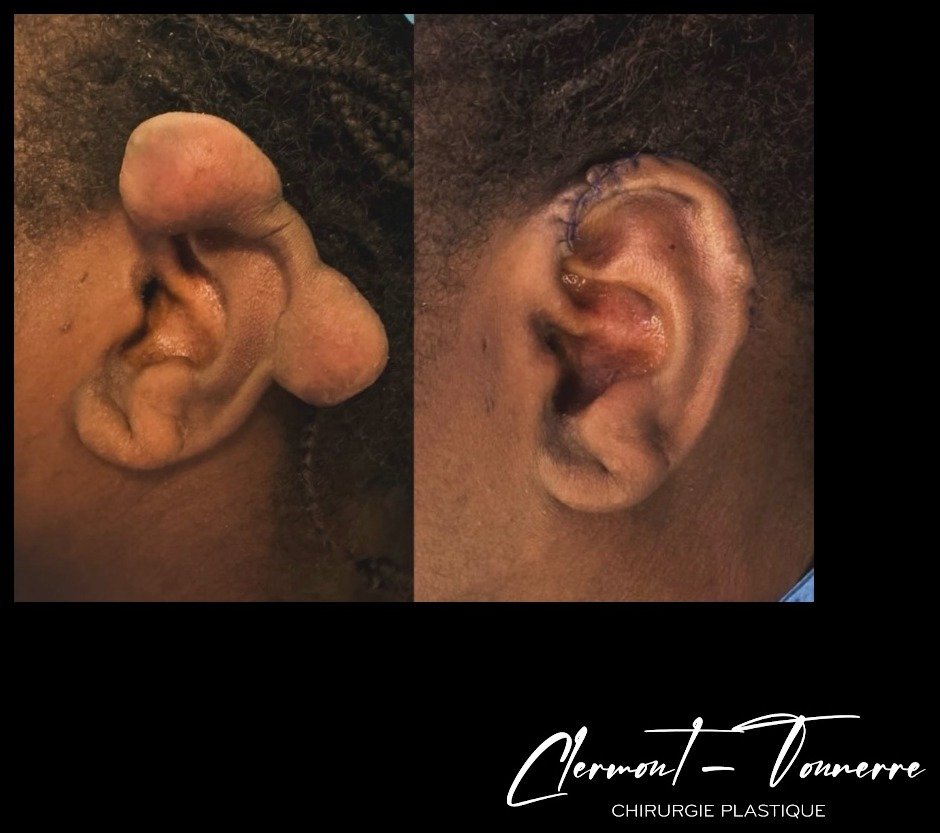
Yes, earlobe keloids (often following piercing) can be effectively treated by a combination of precise surgical excision and post-operative intra-lesional corticosteroid injections. Wearing a compressive ear press (compression clip) for 6 to 12 months after excision is recommended to prevent recurrence. The success rate is good with this combined protocol, far superior to excision alone.
How long is surveillance required after keloid treatment?+
A minimum of 6 to 12 months of regular clinical surveillance is essential after completing keloid treatment. Follow-up consultations allow early detection of any sign of recurrence (thickening, itching, resumed growth) and prompt initiation of additional treatment if necessary. Dr. de Clermont-Tonnerre schedules these follow-up consultations and remains available for any interim concerns.